
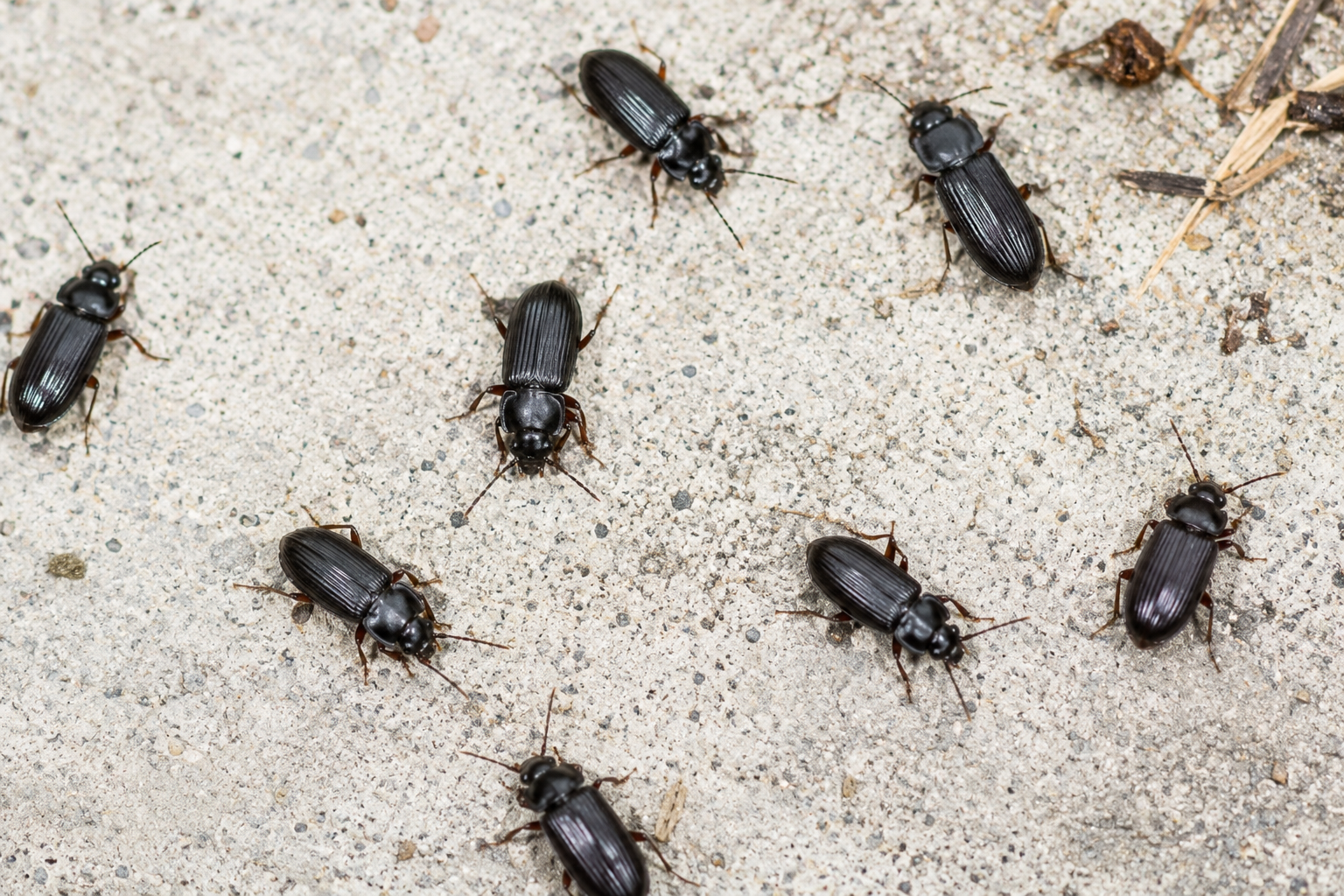
BEETLES
Not all beetles are harmless. Some invade homes in search of shelter, while others can damage wood, stored foods, fabrics, or landscaping. Arrow identifies the beetle species and provides targeted treatments to eliminate the infestation and help prevent future activity.
Beetle Control
Beetles are one of the largest groups of insects in North America, with thousands of species found throughout Indiana, Michigan, Ohio, and Illinois. While many beetles live outdoors and play an important role in nature, others become unwanted pests when they invade homes or businesses.
Depending on the species, beetles can damage food products, clothing, stored goods, wood, or simply become a nuisance by gathering indoors in large numbers. At Arrow, our trained technicians identify the type of beetle you're dealing with and create a treatment plan designed to eliminate the problem at its source.
Why Are Beetles Entering My Home?
Beetles enter structures for a variety of reasons, including:
Looking for food
Escaping extreme temperatures
Seeking moisture
Finding a place to overwinter
Searching for shelter from predators
Many beetles find their way indoors through cracks around doors and windows, gaps in siding, attic vents, utility penetrations, or open garage doors. Once inside, they may hide in walls, attics, basements, crawl spaces, or storage areas.
Common Beetles We Treat
Arrow Services treats many of the beetle species commonly found in our service area, including:
Ground Beetles
Carpet Beetles
Powderpost Beetles
Pantry Beetles
Drugstore Beetles
Cigarette Beetles
Asian Lady Beetles
Elm Leaf Beetles
June Beetles
Japanese Beetles
Each species behaves differently, which is why proper identification is essential for effective treatment.
Signs You May Have a Beetle Infestation
You may have a beetle problem if you notice:
Beetles repeatedly appearing inside your home
Beetles around windows or light fixtures
Small holes in stored food packaging
Damage to carpets, clothing, or upholstered furniture
Small piles of fine wood dust (frass)
Beetles emerging from hardwood flooring or wooden furniture
Large numbers of beetles gathering around the exterior of your home
Some beetles are simply a nuisance, while others can cause costly damage if left untreated.
Are Beetles Harmful?
Most beetles found inside homes do not bite people or spread disease. However, certain species can create significant problems.
Some beetles can:
Damage stored food products
Feed on natural fibers such as wool, feathers, and fur
Bore into hardwoods and structural lumber
Damage ornamental plants and landscaping
Create recurring seasonal infestations
The sooner a beetle problem is identified, the easier it is to control.
Why DIY Treatments Often Fall Short
Many homeowners try aerosol sprays or traps after finding beetles indoors. While these products may kill individual beetles, they often don't address the source of the infestation.
Different beetle species require different treatment methods. For example:
Pantry beetles require locating and removing infested food sources.
Carpet beetles require treating hidden breeding areas.
Powderpost beetles may require specialized wood treatments.
Overwintering beetles often require exterior exclusion and perimeter treatments.
Professional identification is one of the most important steps toward lasting control.
The Arrow Beetle Treatment Process
Every beetle infestation is different. Our technicians customize treatment based on the species involved and the conditions around your property.
Our service includes:
Thorough inspection of the home or business
Identification of the beetle species
Locating breeding or harborage areas
Targeted interior treatments when necessary
Exterior perimeter applications
Recommendations for exclusion and prevention
Follow-up service if needed
Our goal is to eliminate existing beetle activity while reducing the likelihood of future infestations.
How to Help Prevent Beetles
Homeowners can reduce the chances of beetle infestations by:
Sealing cracks and gaps around doors and windows
Installing quality door sweeps and weather stripping
Keeping stored food in airtight containers
Vacuuming regularly, especially around baseboards and upholstered furniture
Reducing excess moisture around the home
Inspecting firewood before bringing it indoors
Keeping landscaping trimmed away from the foundation
Replacing damaged screens and sealing utility openings
These simple preventative steps, combined with professional pest management, provide the best long-term protection.
Why Choose Arrow?
When beetles invade your home, proper identification makes all the difference.
Our licensed technicians understand the habits of the beetle species commonly found throughout Indiana, Michigan, Ohio, and Illinois. We don't rely on one-size-fits-all treatments—we develop customized solutions based on your specific infestation.
Customers choose Arrow because we provide:
Experienced, licensed professionals
Thorough inspections
Customized treatment plans
Effective products and application methods
Preventative recommendations
Friendly, dependable service
Whether you're dealing with a few nuisance beetles or a larger infestation, we're here to help protect your home or business.
Frequently Asked Questions
Why do I suddenly have beetles inside my home?
Many beetles enter homes seasonally while searching for shelter, food, or warmth. Others may already be breeding inside stored products, wood, or fabrics before becoming noticeable.
Will beetles go away on their own?
Some seasonal beetles eventually die indoors, but if the infestation originates inside your home—such as pantry beetles or carpet beetles—the problem will usually continue until the source is eliminated.
Can beetles damage my home?
Certain species can. Powderpost beetles damage wood, carpet beetles feed on natural fibers, and pantry beetles contaminate stored food products. Identifying the species is essential to determining the risk.
How long does beetle treatment take?
Treatment depends on the beetle species and the extent of the infestation. Many nuisance beetle problems improve quickly, while wood-destroying or stored-product beetles may require additional treatments and monitoring.
Can I prevent beetles from coming back?
Routine pest management, sealing entry points, reducing moisture, and proper food storage can significantly reduce the likelihood of future beetle activity.
Keep Beetles Out with Arrow
Whether you're seeing beetles crawling across your floors, gathering around windows, damaging stored food, or threatening your home's wood or furnishings, Arrow has the experience to solve the problem.
Our team will inspect your property, identify the beetle species, and create a customized treatment plan designed to provide long-lasting protection for your home or business.