
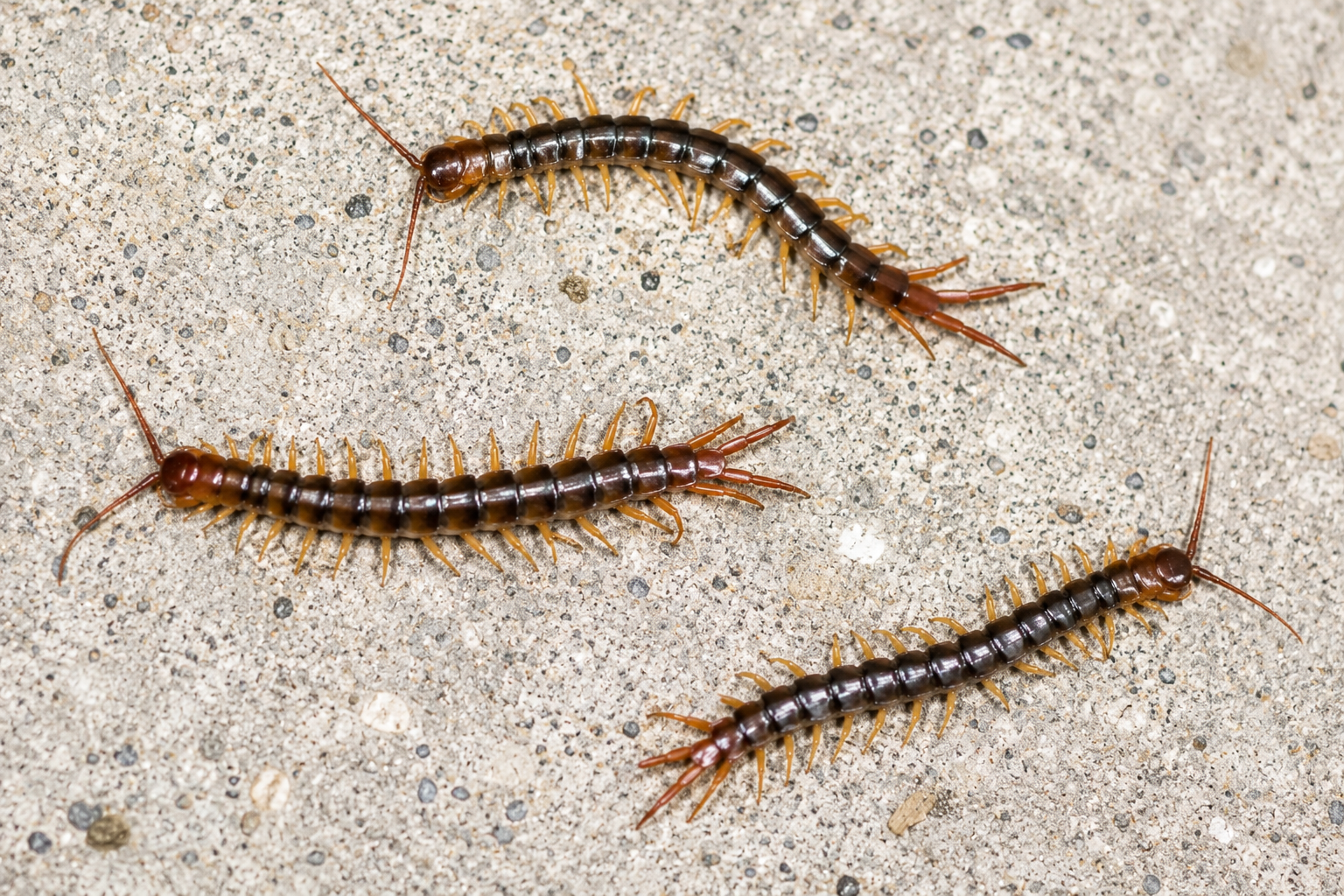
CENTIPEDES & MILLIPEDES
Seeing centipedes or millipedes inside your home can be unsettling. While they typically don't cause structural damage, frequent sightings often indicate excess moisture or other pest activity. Arrow identifies the conditions attracting these pests and provides targeted treatments to keep them out.
Centipede & Millipede Control
Centipedes and millipedes are common household invaders throughout Indiana, Michigan, Ohio, and Illinois. Although they are often mistaken for one another, these pests have different behaviors and habits. Both thrive in damp environments and commonly enter homes while searching for moisture, shelter, or food.
If you're seeing centipedes or millipedes indoors on a regular basis, it may be a sign of excess moisture or an underlying pest problem. At Arrow, our technicians identify the source of the activity and develop a customized treatment plan to help keep these pests outside where they belong.
What's the Difference Between Centipedes and Millipedes?
Although they look similar, centipedes and millipedes have several important differences.
Centipedes:
Long, flattened bodies
One pair of legs per body segment
Move very quickly
Predators that feed on insects and spiders
Can bite if handled, although bites are uncommon and usually mild
Millipedes:
Rounded, cylindrical bodies
Two pairs of legs per body segment
Move slowly
Feed on decaying leaves, mulch, and other organic matter
Do not bite or sting people
Knowing which pest you're dealing with helps determine the best treatment approach.
Why Are They Coming Inside?
Centipedes and millipedes usually enter homes because they're searching for:
Moisture
Cooler temperatures during hot weather
Warm shelter during cooler months
Food sources (especially centipedes)
Protection from heavy rain or changing weather
They often enter through:
Cracks in foundations
Gaps beneath doors
Utility penetrations
Window frames
Garage doors
Basement or crawl space openings
Once indoors, they are commonly found in damp areas of the home.
Where Are They Commonly Found?
You may find centipedes or millipedes in:
Basements
Crawl spaces
Bathrooms
Laundry rooms
Utility rooms
Garages
Around floor drains
Near sump pumps
Under boxes or stored items
Outdoors, they are often found beneath mulch, rocks, leaf litter, landscaping timbers, and other damp, shaded areas.
Are Centipedes and Millipedes Dangerous?
For most homeowners, these pests are more of a nuisance than a danger.
Centipedes may bite if they are picked up or trapped against the skin, but bites are uncommon and are generally similar to a mild bee sting.
Millipedes cannot bite or sting. When disturbed, some species may release a defensive fluid that can produce a temporary odor or stain surfaces.
Neither pest causes structural damage to homes.
Why Am I Seeing So Many?
Large numbers of centipedes or millipedes often indicate favorable conditions around your home.
Common contributing factors include:
Excess moisture
Poor drainage
Thick mulch beds
Leaf piles
Heavy vegetation against the foundation
High insect populations that provide food for centipedes
Reducing these conditions can significantly decrease activity around your property.
The Arrow Treatment Process
Our technicians begin by identifying where centipedes or millipedes are entering and what conditions are supporting their activity.
Our service includes:
Thorough inspection of the property
Identification of moisture issues and harborage areas
Exterior perimeter treatments
Treatment around entry points when needed
Recommendations to reduce moisture and improve drainage
Guidance on landscaping and exclusion practices
Follow-up service if necessary
Because these pests usually originate outdoors, long-term control focuses on reducing exterior populations and preventing them from entering your home.
How to Help Prevent Centipedes & Millipedes
Homeowners can reduce activity by:
Reducing excess moisture around the foundation
Repairing leaking faucets and downspouts
Improving drainage around the home
Keeping mulch several inches away from the foundation
Removing leaves and organic debris
Sealing cracks and gaps around doors, windows, and utility lines
Installing door sweeps and weather stripping
Reducing insect activity that attracts centipedes
Simple maintenance combined with professional pest management can greatly reduce future invasions.
Why Choose Arrow?
At Arrow, we understand that seeing dozens of centipedes or millipedes inside your home can be alarming. Our experienced technicians don't just treat the pests you see—they identify why they're there in the first place.
Homeowners throughout Indiana, Michigan, Ohio, and Illinois trust Arrow because we provide:
Licensed, experienced technicians
Thorough inspections
Customized treatment plans
Effective exterior perimeter protection
Recommendations to help prevent future infestations
Friendly, dependable service
Our goal is to eliminate current activity while helping keep your home protected year-round.
Frequently Asked Questions
Are centipedes beneficial?
Yes. Centipedes are natural predators that feed on insects, spiders, and other small pests outdoors. However, most homeowners prefer not to have them living inside their homes.
Why do I keep finding centipedes in my basement?
Basements are often cool and humid, making them an ideal environment for centipedes. They may also be feeding on other insects living indoors.
Are millipedes harmful?
No. Millipedes do not bite, sting, or damage homes. They are considered nuisance pests that often wander indoors after periods of heavy rain or when outdoor conditions become unfavorable.
Will treating the outside of my home help?
Yes. Since both centipedes and millipedes typically originate outdoors, exterior perimeter treatments and reducing moisture around the home are among the most effective ways to minimize indoor activity.
Can they come back?
Yes. Moisture-loving pests can return if the conditions attracting them remain. Routine pest control service, proper drainage, and sealing entry points provide the best long-term protection.
Keep Multi-Legged Pests Outside with Arrow
Whether you've spotted a single house centipede in your basement or dozens of millipedes around your foundation, Arrow has the experience to solve the problem.
Our team will inspect your property, identify the conditions attracting these pests, and develop a customized treatment plan to help keep your home comfortable, dry, and protected.